September developments reinforce a defense acquisition environment characterized by funding uncertainty, pressure to increase production capacity, and accelerating institutionalization of autonomy. While a continuing resolution provides near-term funding stability, restrictions on new starts and production increases create execution risk for FY2027 priorities. At the same time, DoD is emphasizing production scale and faster contracting, while the Army continues establishing more direct pathways between Soldiers, industry, and emerging technologies. These trends culminate in significant new investment and organizational activity surrounding counter-UAS and autonomous systems.
Funding and Acquisition Execution
President Trump signed a continuing resolution on September 2nd extending federal funding through December 11th, generally maintaining FY26 funding levels while restricting new program starts and production-rate increases. The resulting uncertainty is compounded by DoD's broader funding pressures, including approximately $4.3B in requested reprogramming and potential tradeoffs if Congress does not provide the full $350B reconciliation request (Pg. 5). Contractors should therefore distinguish between requested, authorized, and executable funding, particularly for programs dependent on FY2027 growth. Meanwhile, DoD is emphasizing production scale, factory expansion, streamlined contracting, and faster qualification as priorities for strengthening the industrial base (Pg. 14). The Army's $2.5B ceiling OTA for Abrams AGT1500 engine modernization provides a concrete example of this longer-term investment approach and potential opportunity for Michigan's ground-vehicle industrial base (Pg. 6).
Faster Pathways from Soldier Need to Industry
The Army is continuing to develop acquisition pathways designed to shorten the distance between operational problems and industry solutions. The Fort Bragg Operational Acquisition Detachment and Joint Innovation Outpost can leverage delegated prototyping authority of up to $50M, with reported average contract award timelines of approximately 20 days (Pg. 10). Similarly, Army xTech|Search 10 offers startups and small businesses up to $1M in prizes and introduces SBIR/STTR Phase I opportunities, reinforcing the Army's interest in commercially developed technologies and nontraditional suppliers (Pg. 19). These mechanisms, coupled with continued efforts to obligate funding following a slow FY26 start, indicate that speed from demonstrated capability to funded experimentation and production is becoming increasingly important to industry competitiveness.
Autonomy and Counter-UAS Move Toward Scale
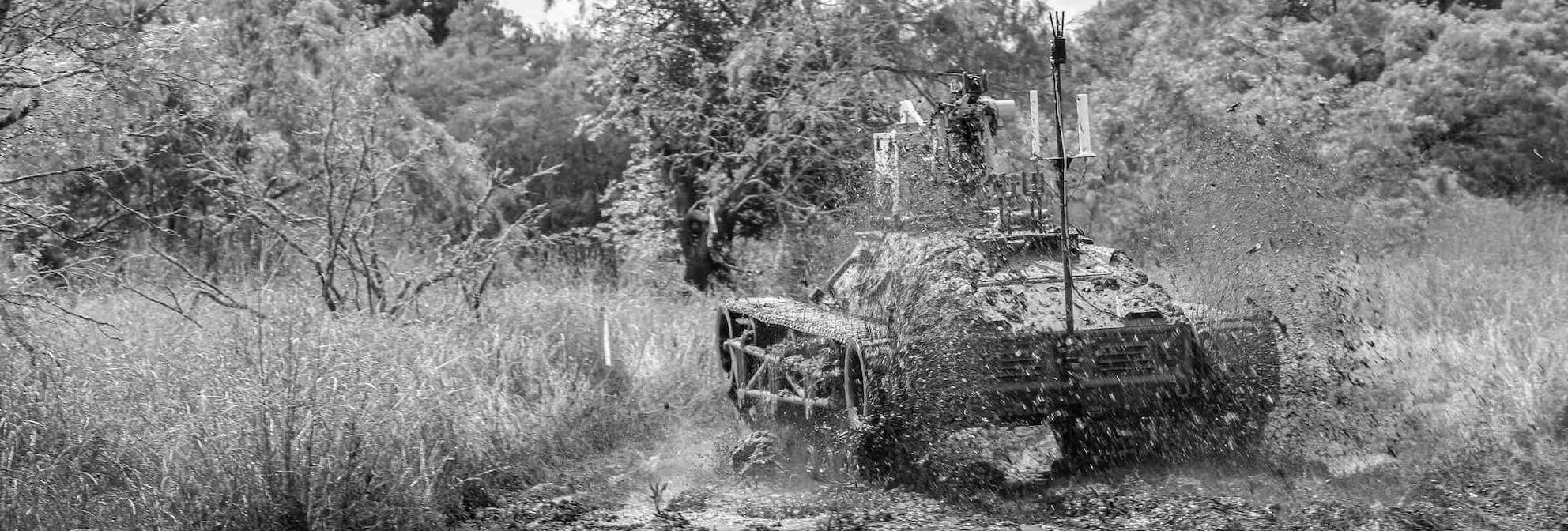
Autonomous and cUAS capabilities continue moving from experimentation toward institutionalized acquisition. The Army's $4.15B combined-ceiling cUAS Marketplace IDIQs establish a significant Detroit Arsenal-centered contracting vehicle spanning detection and defeat technologies, while the 2026 Counter-UAS Quick Reference Guide provides a common operational picture to potentially translate lessons learned into requirements, demonstrations, training, and procurement (Pg. 23). ‘Project Agincourt’ sets pathway for DoW’s announced plan to establish a four-star functional combatant command for autonomous warfare (AUTOWARCOM) (Pg. 8). Additionally, acting Secretary of the Army, Adam Telle’s signed 1-Oct memo provides direction to establish Futures and Autonomous Systems Command (FASCOM) and a PAE for Autonomy further signaling that autonomy is becoming an enduring organizational priority spanning autonomous fires, combat vehicles, watercraft, reconnaissance, breaching, and crewed-uncrewed teaming (Pg. 30). For industry, the direction is increasingly clear: DoD is moving beyond proving that autonomy works toward building the acquisition structures, production capacity, and operational demand necessary to scale it.
Members may read the full report by clicking the button below.