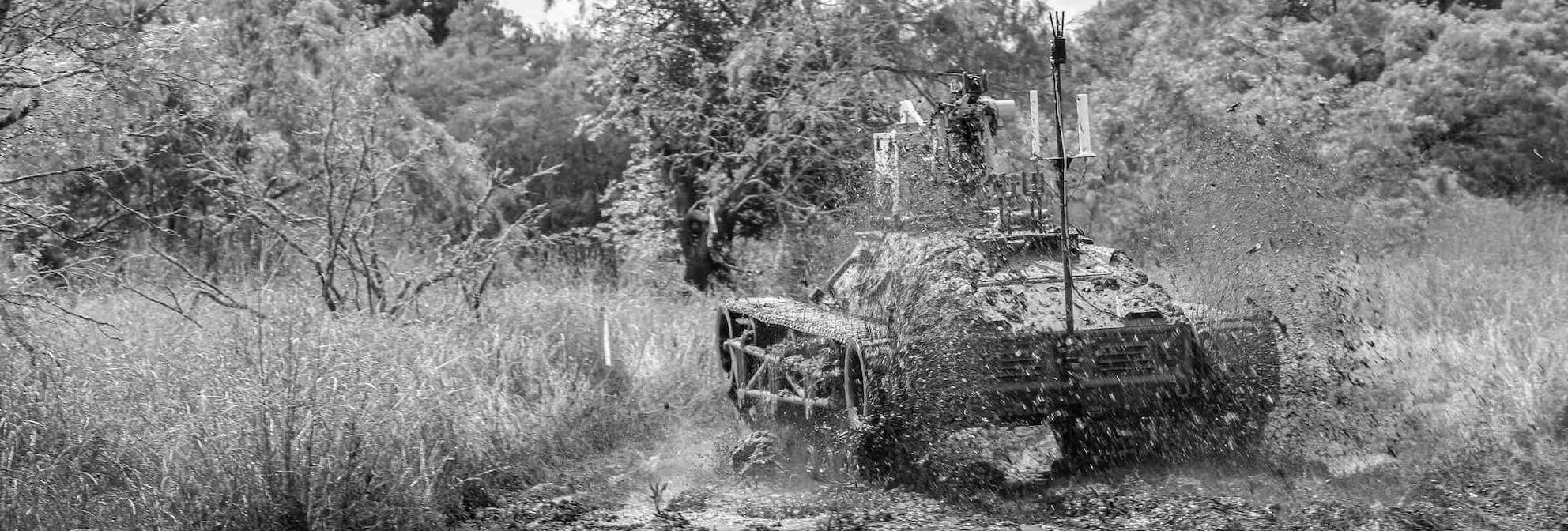
The DoW continues to accelerate adoption of unmanned and autonomous systems through acquisition reform, organizational restructuring, and targeted investments supporting future war-fighting capabilities. Recent actions aim to centralize oversight, streamline acquisition, expand the domestic industrial base (Pg 10), and rapidly transition autonomous technologies to operational use. Autonomy is no longer viewed as a niche modernization effort, it is a core modernization priority with increased emphasis on scalable production, software integration, modular architectures, and rapid-capability delivery.
The DoW established a Direct Reporting Portfolio Manager for Unmanned Systems (DRPM-UxS) to centralize oversight of unmanned systems acquisition, funding, and integration across the Services and key innovation organizations (Pg 7). SECWAR Memo. Congress is reinforcing this direction through FY27 legislation proposing a four-star Robotic and Autonomous Systems Combatant Command to oversee doctrine, training, and operational integration (Pg 14). Beyond DoW, the Department of Homeland Security is also increasing investment in unmanned capabilities, including approximately $130M for unmanned surface forces and $69M for unmanned aircraft systems within the Coast Guard throughout FY27 (Pg 39).
The Army’s persistent effort to integrate AI and autonomous systems into future sustainment operations is highlighted by recent demonstrations conducted by 8th TSC (Pg. 11/28). Additionally, Training and Transformation Command (T2COM) continues to emphasize the importance of Soldier feedback, rapid experimentation, and operational assessments as key drivers of future capability development (Pg 35). T2COM leadership is also prioritizing 1) Balancing production of affordable & exquisite munitions, 2) improving the cost-exchange ratio against low-cost drones, and 3) leveraging AI through modular payloads and open architectures as modernization priorities. Complementing these autonomy efforts, the Army is accelerating development of an enhanced Infantry Squad Vehicle capable of providing exportable power to sustain drones, sensors, communications equipment, and future directed-energy systems during dispersed operations (Pg 31).
Recent acquisition activity indicates autonomous systems are transitioning from experimentation into programs of record. CPE Mission Autonomy – PM Autonomous Robotic Capabilities down-selected five companies for Project Sustainment autonomous logistics, a critical milestone on the path to formal awards and a TiC engagement in 2QFY27. Additionally, the Marine Corps awarded its first production contract for autonomous ground vehicles (Pg 29/35). Simultaneously, the DoW launched the War Force initiative to recruit AI and software talent supporting defense modernization (Pg 7). Collectively, these actions signal growing opportunities for industry partners capable of delivering mature autonomous solutions, resilient power systems, open architectures, scalable manufacturing, and continuous software integration as autonomy becomes a foundational element of future military operations.
Of note: On June 9th, Ms. Michelle Link replaced BG Camilla White as the leader of CPE Combat Sustainment.